

- Home
- About Us
- Service
- Application
- Technology
- Resource
- Contact Us

Untargeted Metabolomics-Plus
Product Overview
Untargeted Metabolomics PLUS combines hydrophilic untargeted metabolomics and lipidomics to co-identify polar metabolites and lipids, boosting identification numbers. Dual workflows ensure comprehensive compound extraction. Integrated bioinformatics delivers unified reports, correlating differential metabolites/lipids with phenotypes for deeper physiological insights.
Advantages
 Advanced MS platforms: Thermo Scientific Q Exactive, Q Exactive Plus, Orbitrap Exploris 120/240, AB SCIEX TripleTOF 6600.
Well-Curated Large Database: Integrated public databases (HMDB, MassBank, GNPS), Commercial databases and in-house database.
Comprehensive Analysis: Optimized dual workflows for metabolites and lipids enable simultaneous identification of hydrophilic (highly polar) and lipid (weakly polar) compounds.
Integrated Reporting: Bioinformatics analysis combines data from both classes into a single, complete report for streamlined interpretation.
High Identification Numbers: Average of 2,000+ compounds identified per blood sample, with metabolites and lipids each accounting for ~50%
Rigorous QC: Blank controls, m/z/retention time stability monitoring, signal intensity validation, PCA analysis, and correlation coefficient assessment.
Large-scale expertise: Proven capability in 15,000- and 22,000-sample cohort projects with real-time QC and advanced bioinformatics.
Product Parameters
| Indicator | Parameter |
|---|---|
| Turnaround Time | 25 Working Days |
| Delivery Standard | Raw Data + Standard Analysis |
Sample Requirements
| Sample Type | Recommended Sample Volume | Minimum Acceptable Sample Volume |
|---|---|---|
| Serum/Plasma/Cerebrospinal Fluid (CSF)/ Amniotic Fluid/Semen | 200 μL | 20 μL |
| Urine/Bile/Tears/Aqueous Humor/Saliva | 1 mL | 20 μL |
| Clinical and Animal Tissue Samples | 100 mg | 20 mg |
| Hard Tissues (e.g., Cartilage) | 200 mg | 20 mg |
| Cells | 5 × 10⁶ | 5 × 10⁵ |
| Exosomes | 1 × 10⁷ | 1 × 10⁶ |
| Feces/Intestinal Contents | 100 mg | 20 mg |
| Soil/Dry Wood Chips | 2g | 20 mg |
| Plant Leaves/Fruits/Pollen/Seeds | 100 mg | 20 mg |
| Plant Roots/Stems/Barks and Mushroom Fungi (e.g., Mushrooms,Auricularia Auricula) | 500 mg | 20 mg |
| Cell Supernatant/Microbial Culture Medium | 500 μL | 20 μL |
| Yeast/Mold Fungi,Non-Pathogenic Bacteria/ Algal Microorganisms | 100 mg | 20 mg |
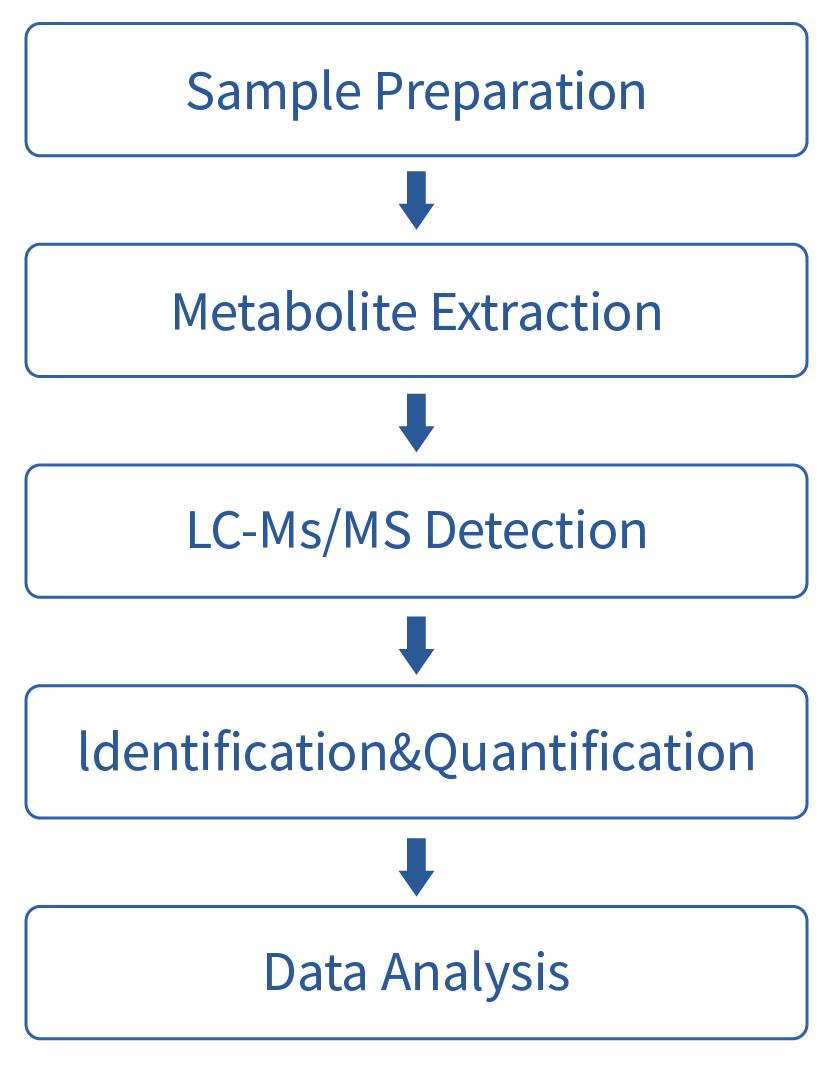
workflow
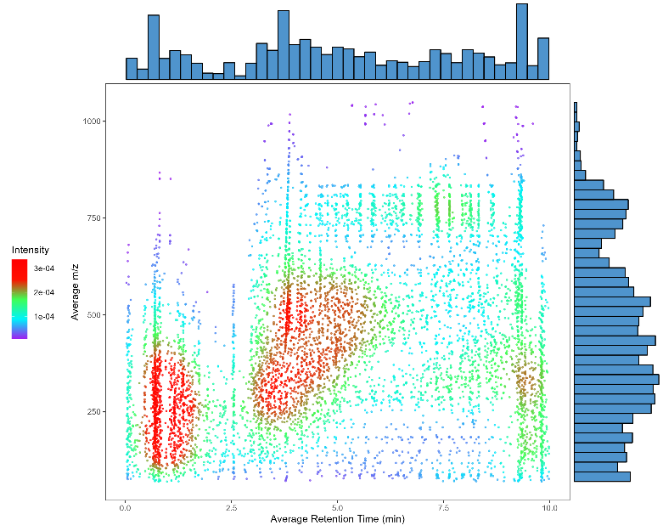
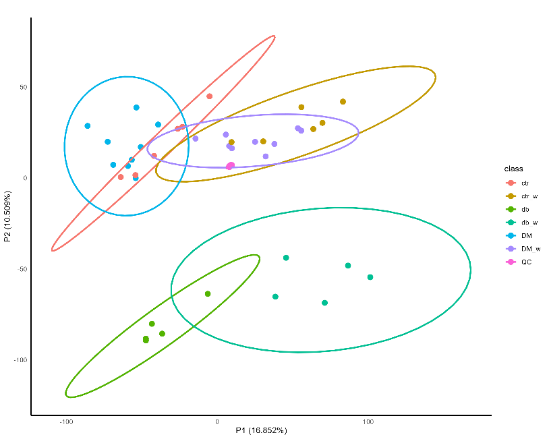
Analysis Contents
Application Scenarios
Suitable for the detection of all common metabolite types, enabling the most comprehensive profiling of samples at the metabolite level and facilitating the discovery of additional differential metabolites and biomarkers.
FAQ
Q:What can this product help researchers achieve?
A: It helps reveal metabolic profile variations across samples, correlate them with phenotypic information, and supports advanced analyses like pathway enrichment and biomarker screening.
Q:What are its typical applications?
A: It is used for mechanism research, disease biomarker discovery, and pharmacological or toxicological evaluation.
Q:What should I do if I focus on specific target compounds?
A:
1.First, confirm with technical support whether targeted metabolic detection is feasible for your target compounds.
2.Note that untargeted metabolomics only provides relative quantification (not absolute quantification) and has limitations in qualitative accuracy.
3.Ask technical support to verify if your concerned substances are included in the curated database and if they can be detected in your specific sample type.
Q:Which product to chose?
Focus on lipids or fat-soluble vitamins – choose Lipidomics Focus on amino acids or organic acids – choose Hydrophilic Metabolomics No specific targets, want comprehensive coverage – choose Mix Budget is not a concern, prioritize high quality – choose Plus