


Breakthrough in TCR Sequencing Combined with AI Modeling Captures Tumor Signals to Precisely Distinguish Benign from Malignant Pulmonary Nodules
Cancer Research, 2025
Large-Scale T-cell Receptor Repertoire Profiling Unveils Tumor-Specific Signals for Diagnosing Indeterminate Pulmonary Nodules
Lead
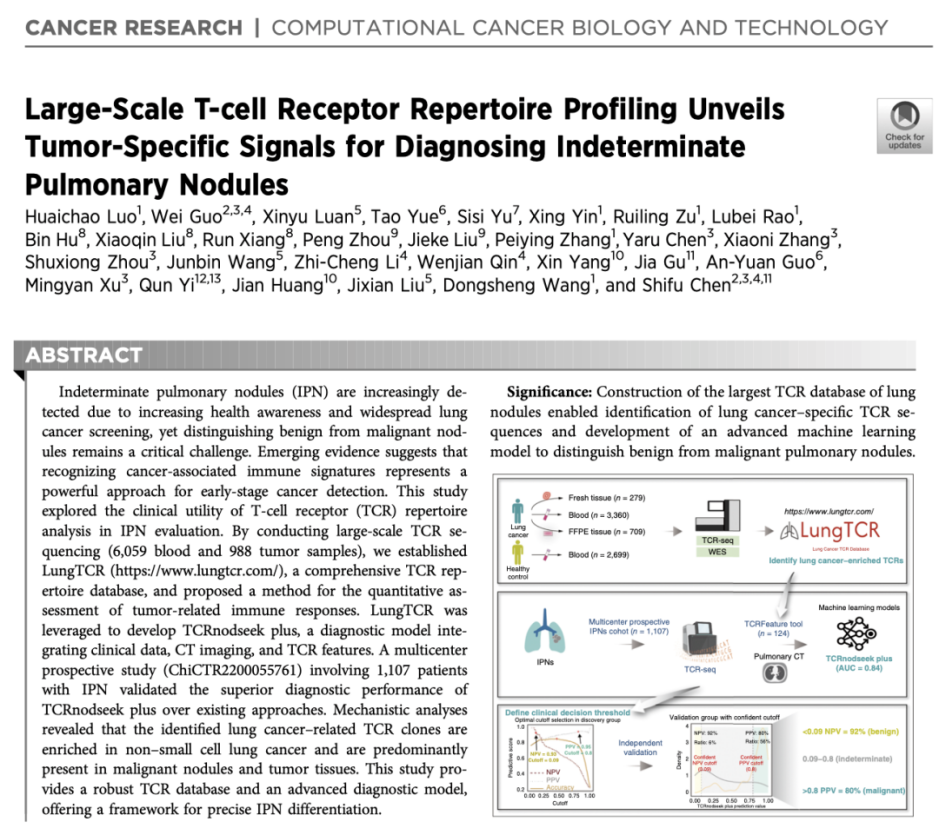
In the thoracic surgery clinic, facing indeterminate pulmonary nodules of unclear nature on a CT report, the question “benign or malignant?” has long been a shared source of anxiety for both physicians and patients. Conventional imaging-based diagnosis is like viewing flowers through fog, prone to missed diagnosis, misdiagnosis, or unnecessary biopsy. In December 2025, Cancer Research (IF: 16.6), a top-tier oncology journal, published online a breakthrough study completed by a multicenter team including Sichuan Cancer Hospital and Shenzhen HaploX. For the first time, through large-scale T-cell receptor (TCR) sequencing, the study successfully decoded the “immune identity card” of pulmonary nodules and constructed a high-performance AI diagnostic model, providing a novel solution to this clinical challenge.
1 Research Highlights
-
World’s largest TCR database for pulmonary nodules: The study established LungTCR, a publicly accessible database, integrating TCR repertoire data from 7,047 samples (including healthy controls).
-
Discovery of tumor-specific “immune fingerprints”: A total of 7,492 lung cancer–associated specific TCR sequences were successfully identified, systematically revealing for the first time the characteristic patterns of the immune microenvironment in pulmonary nodules.
-
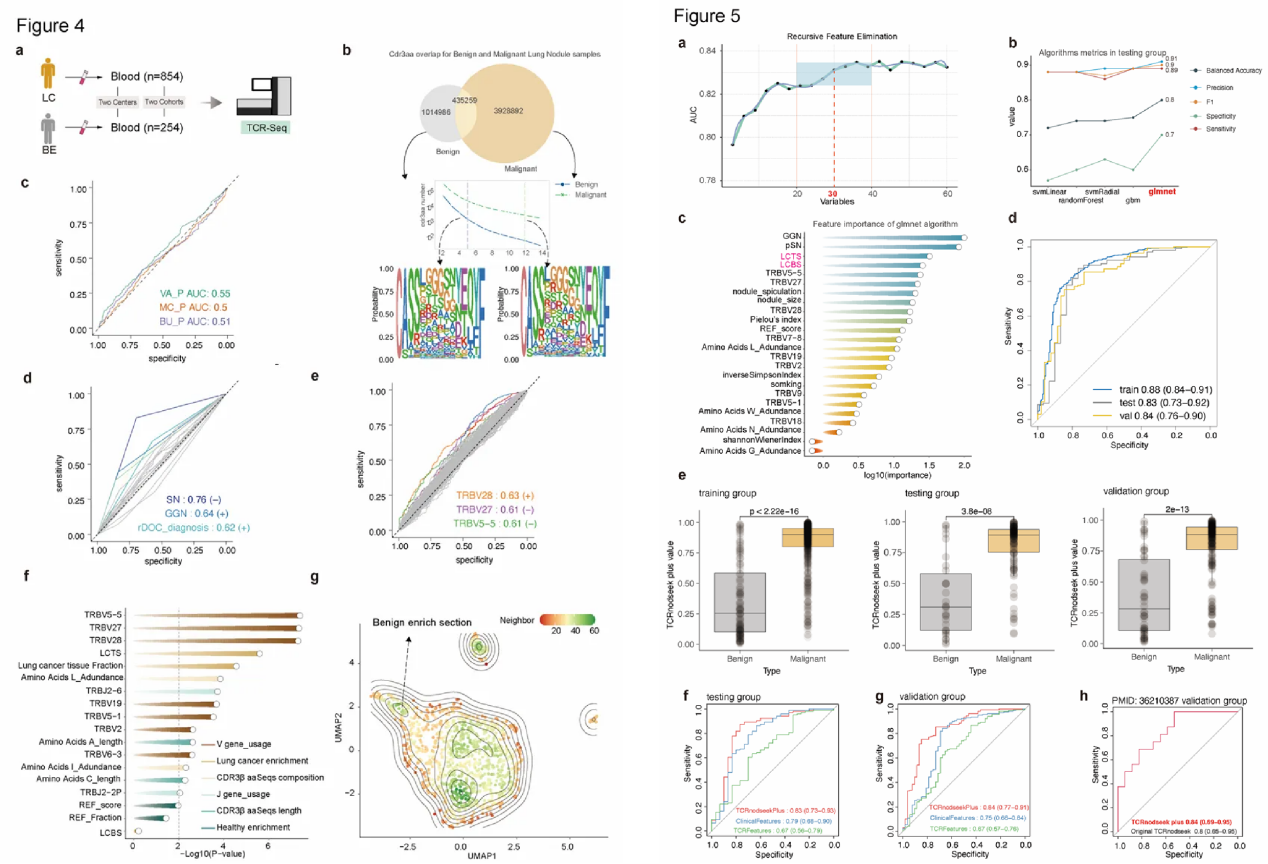
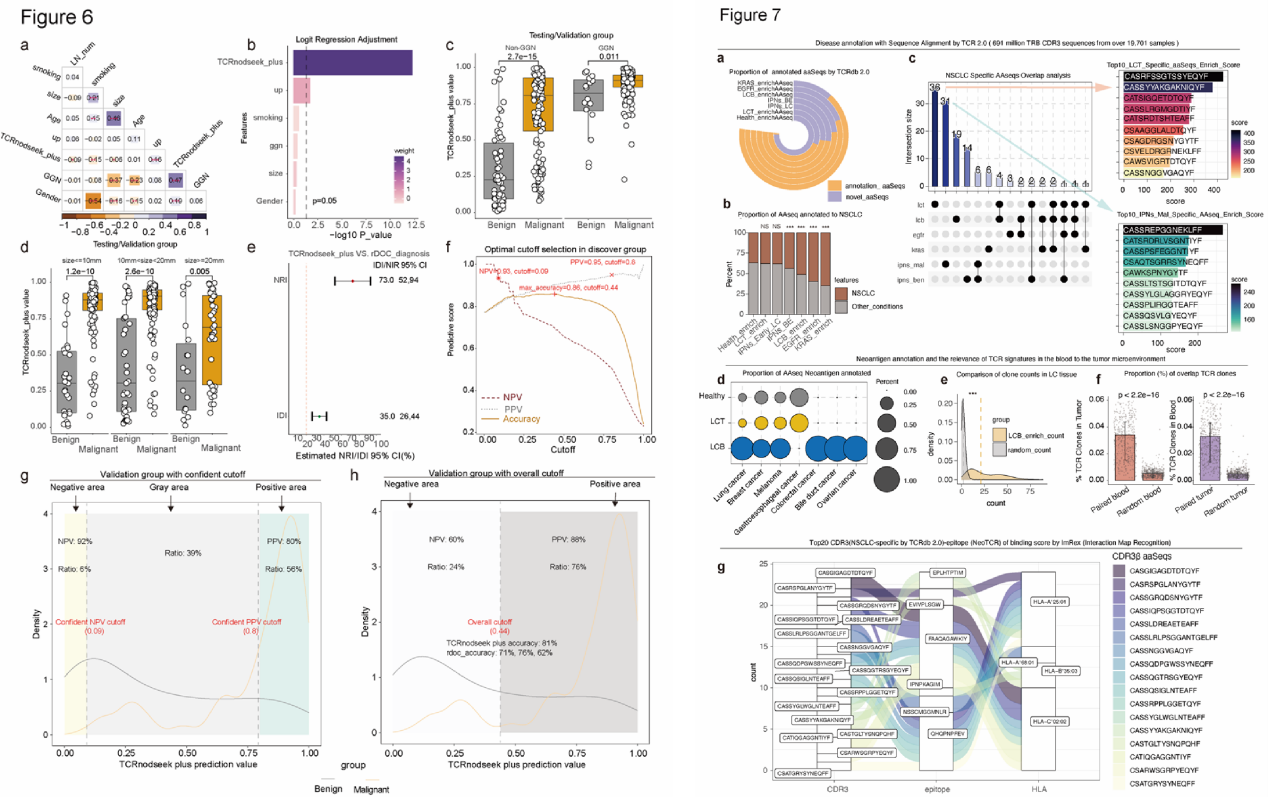
Superior diagnostic performance of the AI model: The developed TCRnodseek plus model achieved a diagnostic AUC of 0.84, representing an approximate 40% improvement over traditional clinical models and helping more than 60% of patients avoid unnecessary invasive procedures.
-
Immediate clinical translatability: The model has been integrated into a public platform that enables global users to upload data and obtain real-time analysis results, truly realizing a fast track from “bench to bedside.”
Study Framework and Core Analysis
2 Research Content
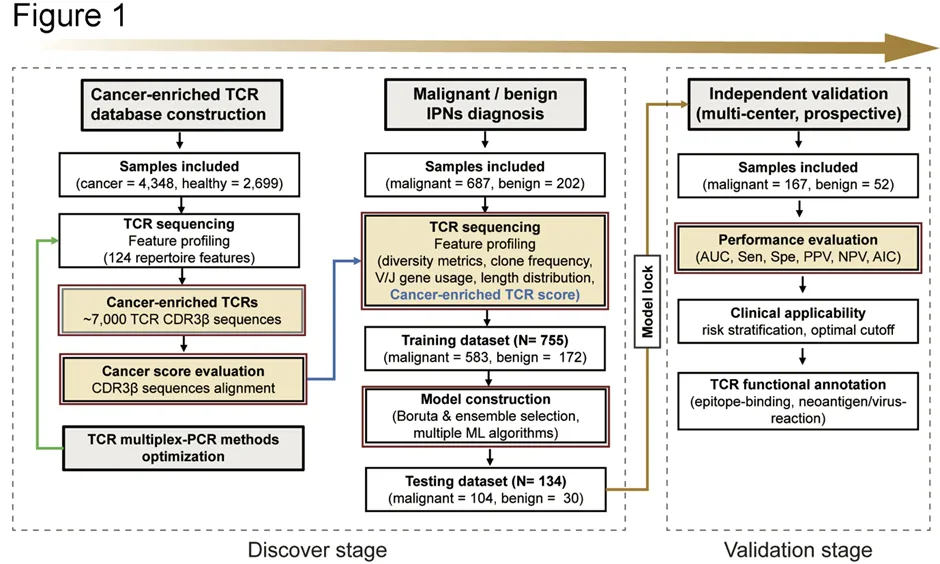
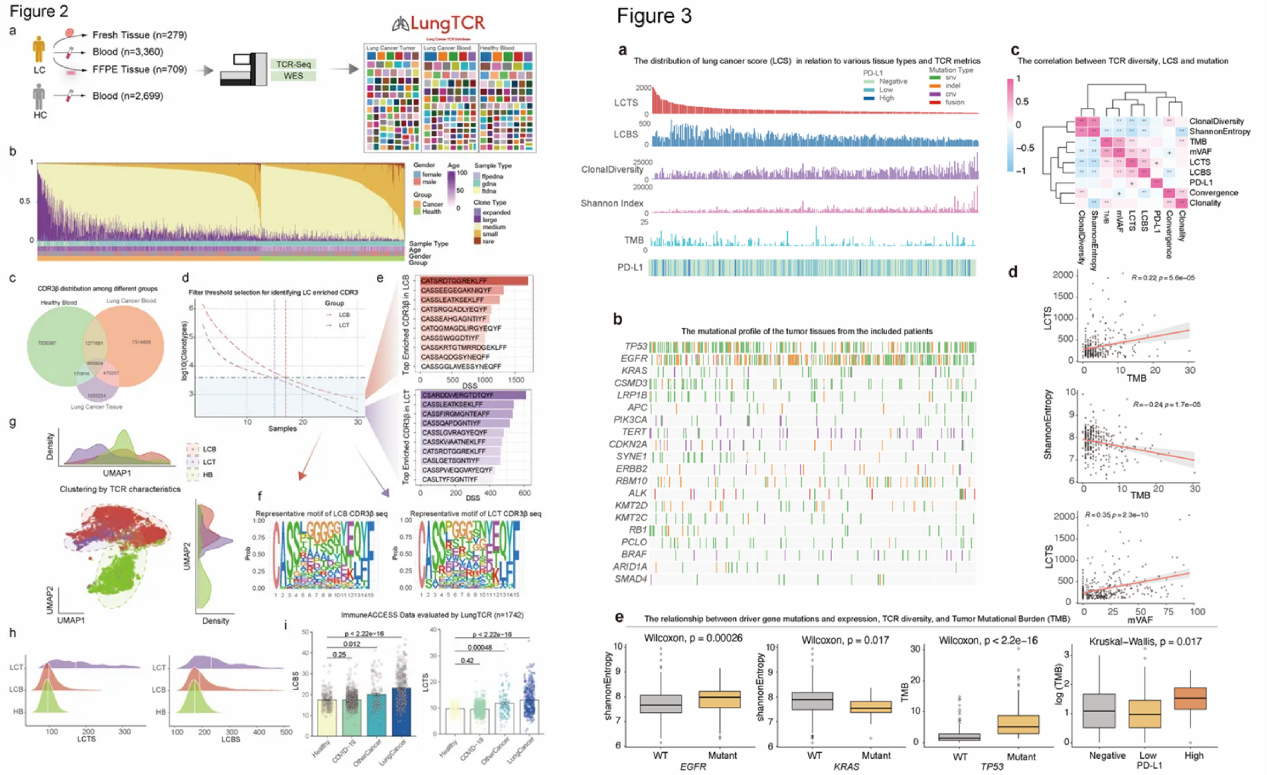
Based on the core premise that tumorigenesis inevitably leaves immune traces, the research team performed high-throughput TCR sequencing on 7,047 samples encompassing lung cancer tissues, patient peripheral blood, and healthy controls. To overcome the technical bottleneck of TCR signal distortion and high amplification bias in conventional sequencing, the HaploX team systematically optimized primers and the reaction system, markedly improving data stability and enabling clear capture of originally low-abundance tumor-specific TCR sequences.
01 Key Findings
-
Identification of tumor-specific TCR clones: A total of 3,652 TCR sequences specifically enriched in lung cancer tissue and 3,840 TCR sequences enriched in the blood of lung cancer patients were identified.
-
Revealing the immune response pattern: TCRs of lung cancer patients exhibited the characteristic of “oligoclonal expansion”—a small number of clones proliferated extensively while overall diversity decreased, providing direct evidence of tumor antigen–driven specific immune responses.
-
Establishment of multi-omics associations: For the first time, TCR features were integrated with tumor mutational burden, PD-L1 expression, and HLA genotype for combined analysis, revealing the intrinsic relationship between tumor genomic alterations and immune responses.
Multidimensional Diagnostic Research Framework for Indeterminate Pulmonary Nodules
02 Technical Breakthroughs
-
Multidimensional feature fusion: For the first time, a trinity modeling strategy integrating “immunomics + clinical information + imaging” was achieved.
-
Interpretable design: The model not only provides a diagnostic result but also traces back the TCR clonal features that dominate the diagnosis, offering clinicians a basis for decision-making.
-
Open-source sharing: All code has been made open-source on GitHub (https://github.com/OpenGene/LungTCR), promoting collaborative innovation in the field.
3 Cross-disciplinary Collaboration
This achievement, three years in the making, would not have been possible without close cross-institution and cross-disciplinary collaboration. Leveraging its expertise in high-throughput sequencing and bioinformatics analysis, the HaploX team led by Dr. Shifu Chen provided critical sample support and workflow optimization solutions, ensuring high-quality integration of multicenter data and analytical reliability. The collaborating teams also include the groups of Wang Dongsheng/Luo Huaichao at Sichuan Cancer Hospital (experimental and clinical design), Prof. Huang Jian’s team at the University of Electronic Science and Technology of China (algorithm development), Gannan Medical University, Peking University Shenzhen Hospital, and multiple clinical centers, jointly advancing fundamental research discoveries toward clinical utility. “We have not only deciphered the language of TCR in pulmonary nodules, but also built a bridge from research to clinic,” the research team stated, adding that they will continue to expand the technology’s applications in treatment monitoring and prognosis evaluation, providing a more systematic immune diagnostic solution for the early diagnosis and treatment of lung cancer.
4 Research Value
-
Systematically elucidated for the first time the TCR characteristic patterns associated with benign and malignant pulmonary nodules;
-
Established a “genome–immunome” association analysis framework, revealing the relationship between tumor driver genes and TCR responses;
-
Developed and validated an AI diagnostic model integrating TCR and clinical information, significantly improving diagnostic accuracy;
-
Built the publicly accessible LungTCR database, promoting result sharing and clinical translation.
01 Original Paper
https://pubmed.ncbi.nlm.nih.gov/41150899/