


HaploX and Professor Caicun Zhou's Team Publish an Article in Advanced Science: WESPlus Sequencing Predicts Prognosis of First-Line Chemotherapy in Lung Cancer
Advanced Science, 2021
Mutational Profile Evaluates Response and Survival to First-Line Chemotherapy in Lung Cancer
The academic achievement of Professor Caicun Zhou and Professor Yayi He's team from Shanghai Pulmonary Hospital, together with the HaploX Oncology Academic Department, on predicting the response and prognosis of lung cancer patients after first-line chemotherapy based on the mutational spectrum, has been published in the journal Advanced Science (IF = 15.84). This study employed the proprietary WESPlus sequencing of HaploX and evaluated therapeutic efficacy and prognosis based on molecular subtypes, clarifying the correlation between molecular markers in lung cancer and the survival of lung cancer patients after first-line chemotherapy.
Study Background
Evaluating the therapeutic response and survival of lung cancer patients receiving first-line chemotherapy has always been difficult, as only limited biomarkers are available for evaluation and histology therefore represents an empiric tool to guide therapeutic decision making. This study aimed to identify mutational characteristics associated with the therapeutic response and survival of lung cancer patients receiving first-line chemotherapy, with the expectation of providing effective molecular markers for predicting chemotherapy response and prognosis.
Study Methods
This study included 186 lung cancer patients without EGFR and ALK alterations, among whom 145 were non-small cell lung cancer (NSCLC) patients and 41 were small cell lung cancer (SCLC) patients. Cancer tissue and blood samples were tested using the proprietary HaploX WESPlus panel. Before sample collection, none of the subjects had received chemotherapy, radiotherapy, targeted therapy, or immunotherapy.
Study Results
1. Mutational Spectrum of Lung Cancer Patients without EGFR and ALK Alterations
The mutational spectrum of lung cancer patients without EGFR and ALK alterations was established, and TP53, DPP6, DEAF1, SP8, and ATXN2 were found to have the highest mutation frequency in the whole cohort. Further analysis revealed that patients of different histological subtypes exhibited distinct mutational profiles: the KRAS mutation frequency in lung adenocarcinoma (LADC) patients (27.6%) was higher than that in lung squamous cell carcinoma (LUSC) (5.6%, P < 0.001) and SCLC (0.0%, P < 0.001) patients; RB1 mutations were frequent in SCLC patients (39.0%) but much less frequent in LADC (10.3%, P < 0.001) and LUSC (1.4%, P < 0.001) patients. The high-frequency CDKN2A mutation (19.4%) in LUSC patients was absent in SCLC (0.0%, P = 0.003) (Figure 1).
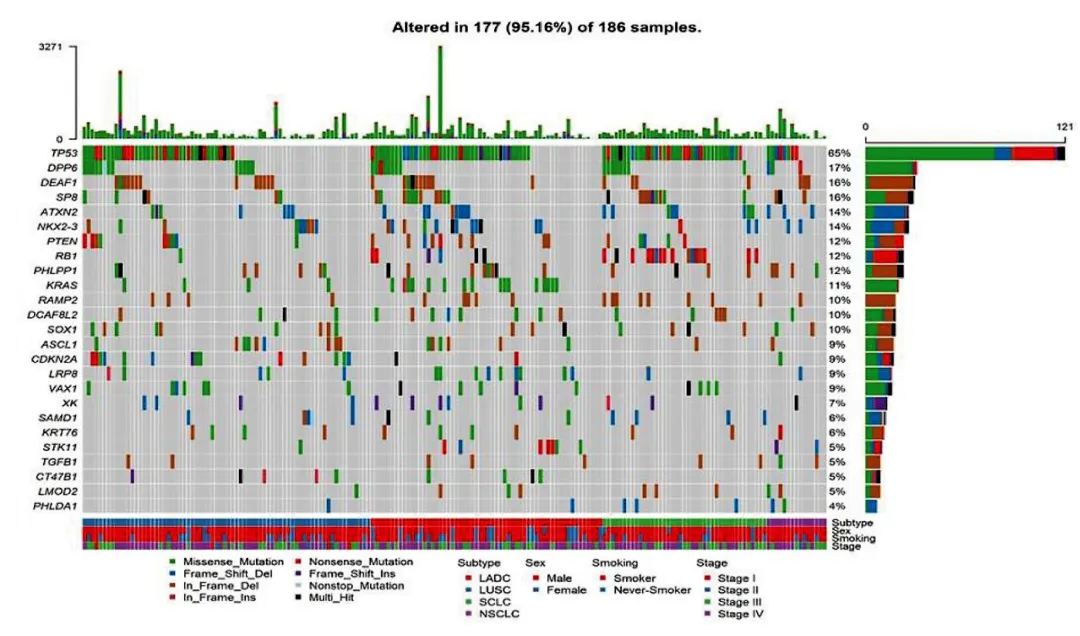
Figure 1. Mutational spectrum of lung cancer patients without EGFR and ALK alterations
2. Evaluation of Therapeutic Efficacy and Prognosis Based on Molecular Subtypes
Based on the mutational signatures of NSCLC and SCLC patients, unsupervised clustering analysis subdivided NSCLC (C1-C4) and SCLC (C5-C8) into four molecular subtypes each. There was no significant difference in response to first-line chemotherapy among the four molecular subtypes (PR vs. non-PR). No significant difference in survival was observed among NSCLC patients of different molecular subtypes. However, the progression-free survival (PFS) differed significantly among SCLC C5-C8 subtypes (P < 0.001), and the one-year survival rates were 33.3%, 50.0%, 59.1%, and 50.0%, respectively. Further analysis found that the C7 subtype had better PFS than the C8 subtype in SCLC patients (P < 0.001), but this difference was not observed in overall survival (OS) (P = 0.83) (Figure 2).
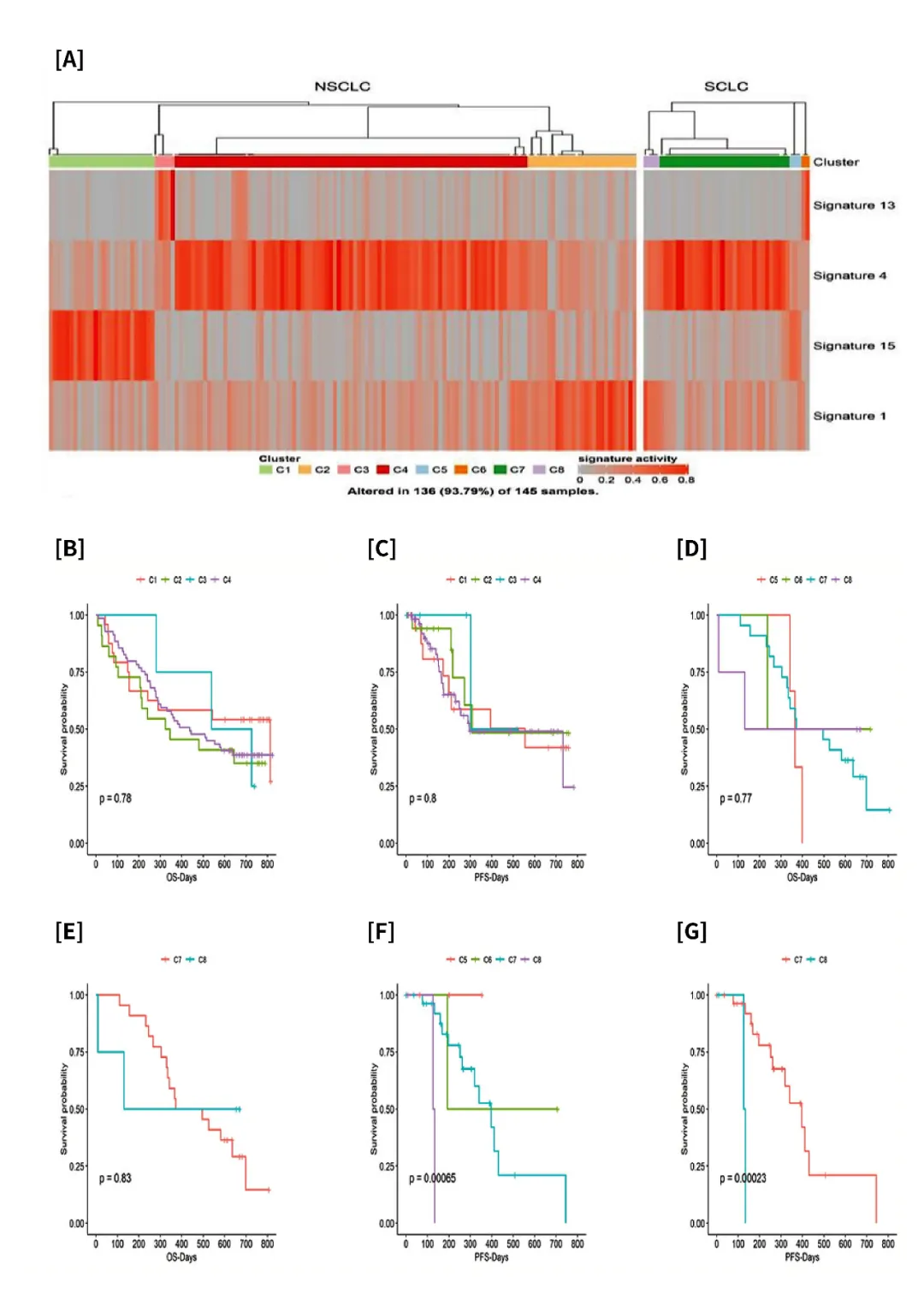
Figure 2. Molecular subtypes and long-term survival evaluation of lung cancer patients without driver gene mutations. (A): Mutational signatures of four NSCLC molecular subtypes (C1-C4) and four SCLC subtypes (C5-C8). (B-G) Comparison of OS and PFS among NSCLC and SCLC molecular subtypes.
3. Evaluation of Therapeutic Efficacy and Prognosis Based on TMB-Defined Subtypes
Patients were divided into three subgroups (S1, S2, and S3) according to the level of tumor mutational burden (TMB). S1 represented the low TMB group (TMB <= 10 mutations/Mb), accounting for more than half of the patients; S2 represented the medium TMB group (10 mutations/Mb < TMB <= 20 mutations/Mb); and S3 represented the group with the highest TMB (TMB > 20 mutations/Mb), with the smallest number of patients. Analysis of the correlation between TMB and the response of NSCLC to first-line chemotherapy revealed no significant difference in response among the three TMB subgroups (P = 1.000). Investigating the correlation between TMB and the prognosis of NSCLC patients receiving first-line chemotherapy, although no significant difference in prognosis was observed among the S1-S3 subgroups, the trend indicated that the OS and PFS of the S3 subgroup were slightly worse than those of the S2 and S1+S2 subgroups (Figure 3).
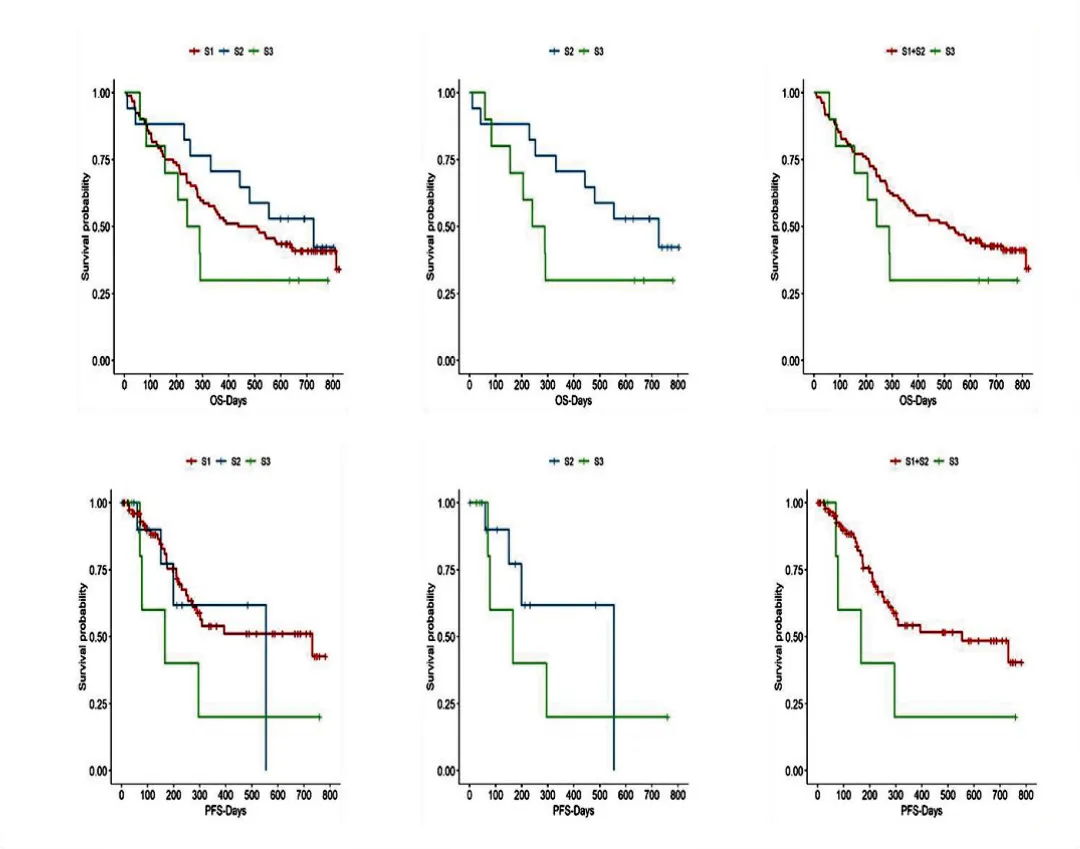
Figure 3. Comparison of OS and PFS among different NSCLC TMB subgroups
Study Conclusions
Based on genomic alteration characteristics, NSCLC patients can be classified into four subtypes (C1-C4), and the long-term survival rates are similar among different subtypes; SCLC patients can also be divided into four subtypes, but their PFS shows significant differences (P < 0.001). Based on TMB, NSCLC patients can be divided into three subtypes (S1-S3); compared with the S1 and S2 subtypes, the S3 subtype with higher TMB shows a trend toward worse survival, but no significant correlation was observed between molecular subtype and the efficacy of first-line chemotherapy. In conclusion, this study identifies molecular signatures associated with the survival of lung cancer patients after first-line chemotherapy.